Investing
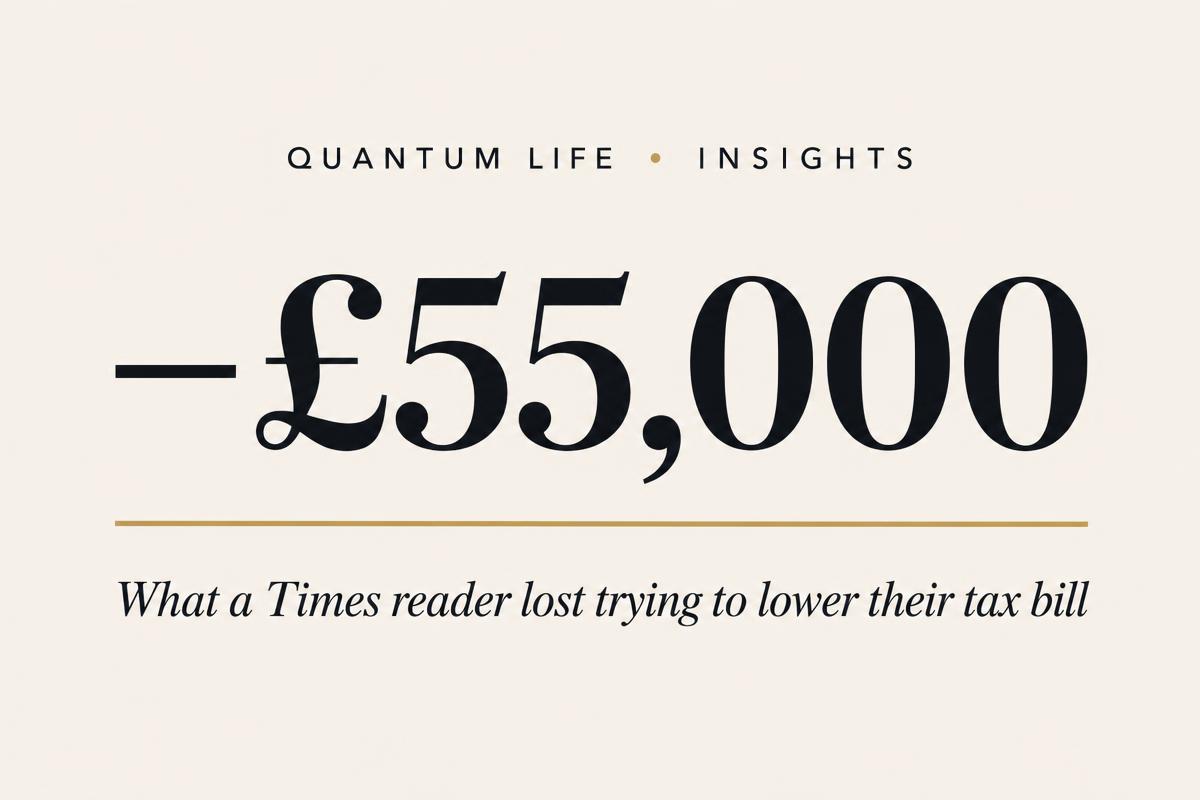
I tried to lower my tax bill but lost £55,000

By Robert Wilcocks, Founder, Quantum Life
CISI Level 6 Advanced Financial Planning · Registered Life Planner®
Published · Updated
In short
The investor in the story lost £55,000 because they invested for the tax relief rather than the investment, and generous reliefs usually exist because the underlying investments carry more risk. Tax relief can soften that risk, but it cannot turn a bad investment into a good one.
This was a recent headline in The Times about someone who tried to lower their tax bill and ended up losing £55,000. Ouch.
It’s a useful reminder of something I tell clients all the time: never make an investment just for the tax break.
I completely understand the temptation.
You sell a business, have a very good year or receive a large bonus. Then you see the tax bill and think: surely there’s something clever I can do here?
Sometimes there is. There are useful tax-efficient investments. But the incentives can be generous precisely because most investments with big tax breaks inherently carry more risk.
The tax relief can soften that risk, but it cannot turn a bad investment into a good one.
So before investing to save tax, I’d ask three questions.
1) Would I buy this without the tax break? Would you still want it if HMRC offered you nothing back?
This is my favourite test because it cuts through any clever-looking paperwork from the company or broker advertising it.
2) Do you understand what you’re investing in?
3) Does it fit with everything else you own, as part of your financial plan and targets?
If the answer is no to any of those three, I’d be very cautious. Tax should be a benefit of a good investment, not the entire reason for making it.
What happens if it goes wrong?
We all like looking at the possible upside. The return. The tax saving on possible capital gains. The glossy chart heading north-east.
Spend just as much time on the ugly version.
How much could you lose? How long is the money tied up? Can you get it back if life changes? What are the fees? Could anything cause you to lose the tax relief too?
Perhaps most importantly: if I lost all of this money, would it change my life or knock my plans off course?
If it would, think very carefully.
Is there a simpler answer?
Are you making sensible use of pensions and ISAs? What about onshore and offshore bond options with their 5% return of capital allowance? Are there opportunities between spouses or civil partners?
Is there more you could do on structure first, before chasing possibly expensive tax reliefs? Family Investment Companies and plain old simple hold-co structures, moving profits up to defer dividend taxes, and investing in large public companies via a business you own might be a better long-term play than investing in businesses you can’t even value, let alone sell if you need to.
And don’t forget the most obvious option of all: you could just pay the tax and take (let’s assume higher-rate CGT) 76% of the total gain.
What do you think Warren Buffett would do? I think he would want to buy great businesses that he can understand.
Nobody enjoys doing it. But paying some tax can be considerably cheaper than making a terrible investment to avoid it.
Rob
This article is for general information only and is not personal advice or a recommendation. Tax treatment depends on individual circumstances and may change. The value of investments can fall as well as rise and you may get back less than you invested.
Frequently asked questions
Should I invest just to get a tax break?
No. Ask whether you would buy the investment without the tax relief, whether you understand what you are investing in, and whether it fits your wider financial plan. If the answer to any of those is no, be very cautious.
What should I check before a tax-efficient investment?
Look at the downside as carefully as the upside: how much you could lose, how long the money is tied up, whether you can get it back if life changes, the fees, and whether anything could cause you to lose the relief. Ask whether losing it all would knock your plans off course.
Are there simpler ways to reduce tax on investments?
Often. Make sensible use of pensions and ISAs, consider onshore and offshore bonds and opportunities between spouses or civil partners, and look at structures such as Family Investment Companies or holding companies. Sometimes simply paying the tax is cheaper than a poor investment made to avoid it.