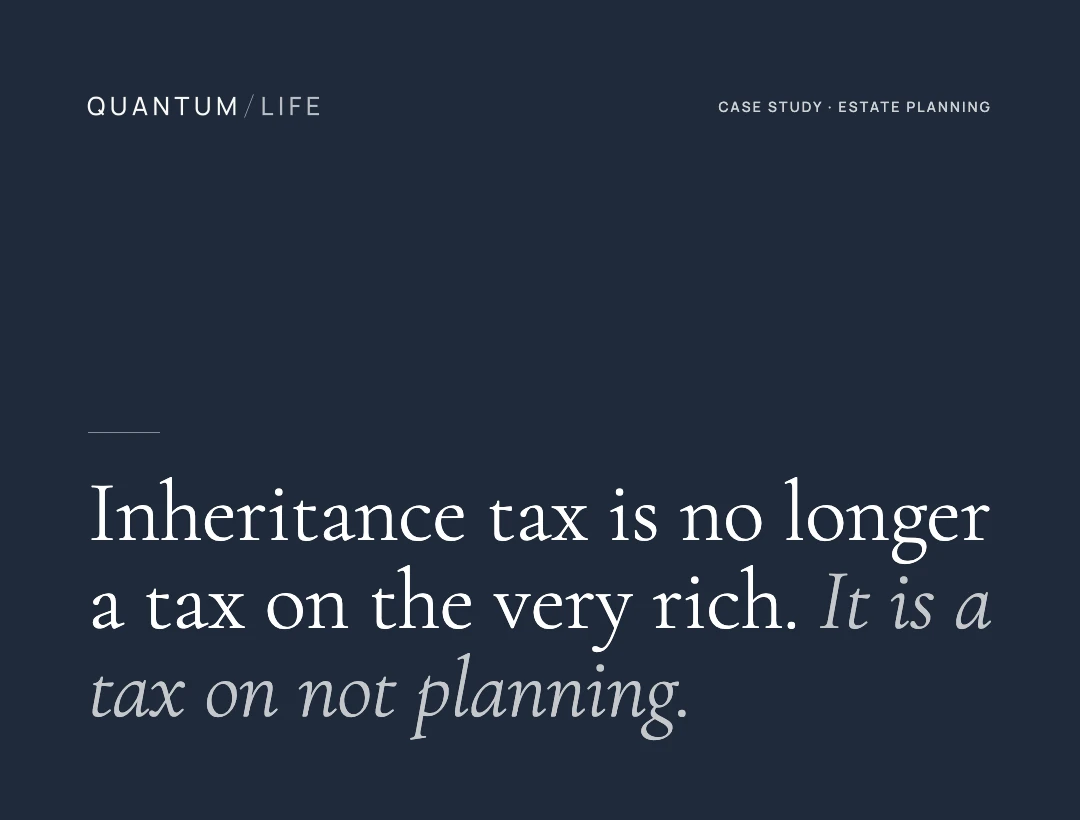
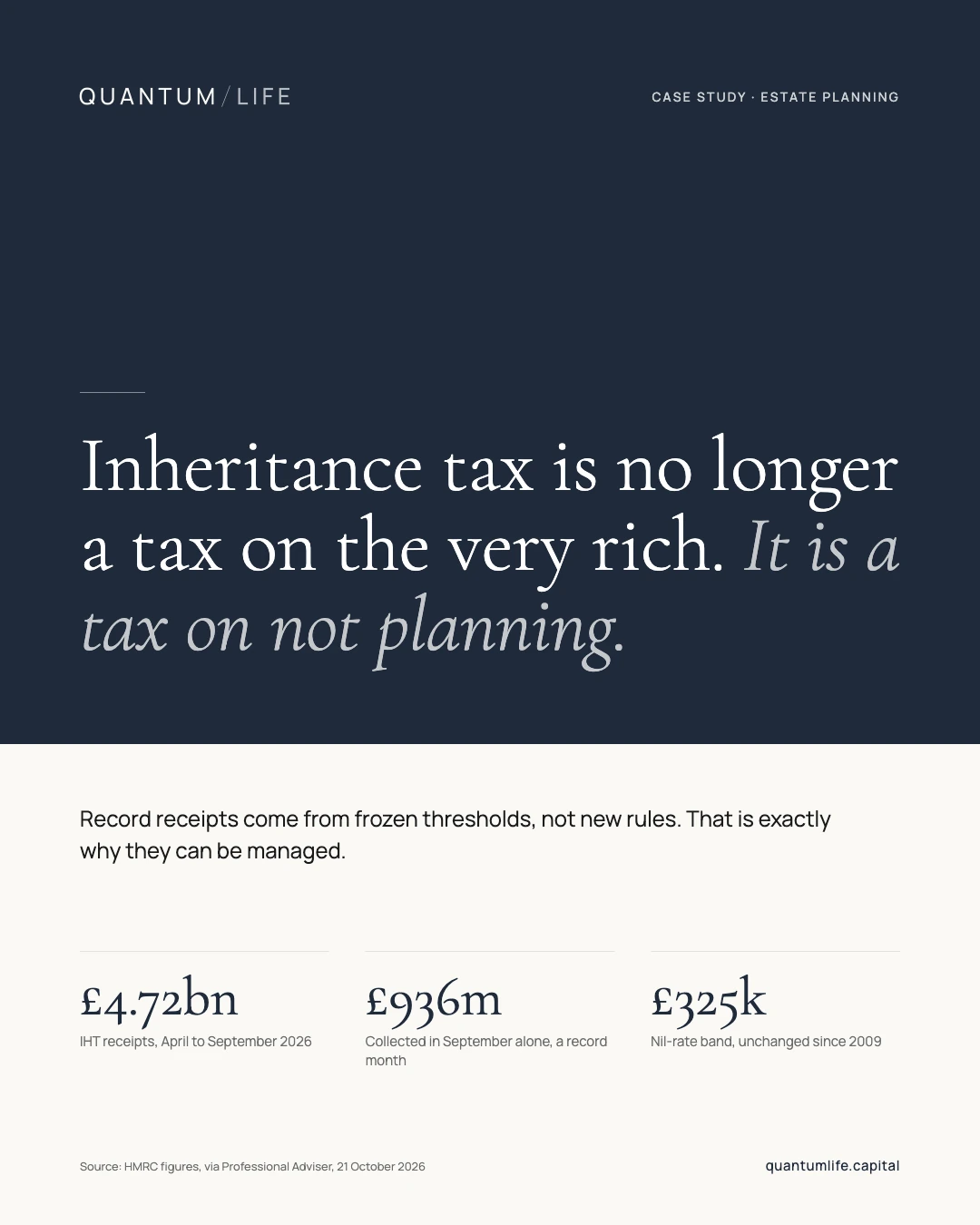
Inheritance tax is no longer a tax on the very rich. It is a tax on not planning.
Record receipts come from frozen thresholds, not new rules, and that is exactly why they can be managed.
By Robert Wilcocks, Chartered MCSI
Founder, Quantum Life · Chartered Member of the CISI · Registered Life Planner®
9 min read · Published

HMRC collected £4.72bn in inheritance tax between April and September, up 7% on last year. September alone brought in a record £936m (Professional Adviser, 21 October).
The biggest driver is not new rules but frozen thresholds. The nil-rate band has sat at £325,000 since 2009 and is frozen until April 2031, while house prices, portfolios and pensions keep growing. Every year, more ordinary families cross the line simply by standing still.
The Budget lands on 28 October. Whatever the Chancellor announces, the lesson of these figures will not change: the families who pay most are usually the ones who waited. Here is what planning looked like for one couple we worked with this year.
The family
A retired couple with a family home, a buy-to-let portfolio, investments and pensions. On paper, their problem was a seven-figure inheritance tax bill on second death.
In practice, their bigger risk was something else. They had saved diligently all their lives, spending less than they earned and investing the difference. That habit built their wealth. Now it was the habit they needed to turn around.
We started by establishing the real cost of their life. Once we had a clear baseline, it showed they were in the fortunate position of having around £50,000 a year of income left over after everything they actually spend.
Step 1: Gift the surplus income
Regular gifts made out of surplus income can leave an estate immediately, with no seven-year wait. Of their £50,000 surplus, we gift £25,000 a year directly and put £12,000 towards insurance premiums (step 3). Including the seven-year term premiums, that commits about 76% of the surplus, measured after the property and cash pass into the trust. The buffer is prudent and easy to evidence to HMRC.
Over 20 years of retirement, assuming good health, the £25,000 a year means £500,000 out of the estate and roughly £200,000 less inheritance tax.
The real figure is likely higher. Had that money stayed invested, it would have kept growing inside the estate, so the eventual saving could approach £400,000, assuming 7% annual growth.
This is low-hanging fruit, but it is often missed or claimed badly. To qualify, gifts must:
- form part of a regular pattern of giving
- come from income, not capital
- leave the giver able to maintain their usual standard of living
Capital gifts and income gifts have very specific definitions, so you cannot simply start giving and assume the money is out of your estate. We drafted a signed statement of intent and set up careful records from day one. Without them, a valid plan can become a probate nightmare for the executors.
Step 2: Pass on property they no longer need
With the gifting strategy in place, the couple did not need several of their buy-to-let properties. One, worth around £400,000, is going into a discretionary trust for their children and will pay them about £20,000 a year in rental income.
We added £250,000 of cash, bringing the total to £650,000 and using both of their nil-rate bands in full (no chargeable transfers in the prior seven years). Both are capital gifts, so they leave the estate once the couple survive seven years. In nominal terms, that is a further £260,000 of inheritance tax saved.*
The trust’s income arrangements make the trustees’ lives easier and pass the income to the children, subject to trust taxation and their own tax positions.
The children benefit now, while their parents are alive to see it, rather than waiting for an inheritance.
*Capital gains tax on the property can usually be deferred with holdover relief, with the trustees taking on the original base cost. Legal and valuation costs reduce the net benefit, but the strategy remains worthwhile overall.
Step 3: Insure the plan
Two types of cover protect the strategy, and both cost little next to the risks they cover.
Seven-year cover. If either of them died within seven years, their gift would use up their nil-rate band, adding up to £130,000 to the tax bill on second death for each life. That risk stays level for the full seven years. A common misconception is that taper relief reduces it, but taper only applies to tax on gifts above the nil-rate band. So we used two single-life level term policies written in trust, one on each of them, at around £80 a month in total. That is at the upper end of quotes, because one of them had a minor health disclosure that does not affect life expectancy. That is roughly £7,000 over seven years to hedge a £260,000 liability.
The lesson: arrange cover while you are fit and healthy. Standard rates are cheaper over the long run, and a change in health can make cover expensive or impossible to get.
Whole-of-life cover in trust. A joint policy from a financially strong insurer pays £1 million on second death into a bare trust for the children. The premiums come from surplus income, so they leave the estate straight away, and the payout sits outside the parents’ estate. The children can use it to pay the tax bill so nothing has to be sold in a hurry or, if the spending and gifting plan has done its job, to fund their own lives. Premiums are around £1,000 a month. For a couple aged 65, with second death at 90, that is £300,000 of premiums for a £1 million payout: a return of roughly 8.6% a year, outside the estate and with no exposure to the markets. To leave the children the same £1 million from an investment account inside the estate, the couple would need around £1.67 million before inheritance tax. That means about 12% a year on the same premiums, before income tax, capital gains tax and fees. An earlier death means a higher return; a longer life, a lower one.
Step 4: Give them permission to spend
The last recommendation had nothing to do with tax: go on more holidays. We showed them, in black and white, that they had more than enough.
This was a couple who booked night flights to save money. When we talked through how much difference they could make to their children today, and the freedom they now had to live their own lives, there were tears in their eyes.
The psychology of wealth does not live on a balance sheet or a profit and loss statement. It lives between your ears.
Coaching, cashflow planning and estate planning expertise, combined with the right financial products, can deliver a return on life as well as a strong return on the fees relative to the tax saved.
Why plan now, not after the Budget
The record receipts come from fiscal drag and inaction, not new rules. So the right response is to plan on the law as it stands, rather than wait to see what 28 October brings.
The next change is already legislated. From April 2027, most unused pension funds and death benefits will fall into the estate for inheritance tax. For many retired clients, the order in which they draw on pensions, ISAs and other investments now matters as much as their will.
Moving abroad is not a simple exit either. Since April 2025, inheritance tax has followed long-term UK residence rather than domicile, so clients who have relocated, including to Dubai, can remain in scope for years after leaving.
This couple’s plan has four parts, but the principle is simple: much of the tax can be reduced by families who plan early, and the planning often gives them a better life along the way. If your estate has grown faster than the thresholds, talk to us before the Budget, not after.
Important information
This case study is anonymised and some details have been changed to protect client confidentiality. It is for illustration only and is not personal advice. The figures shown are nominal estimates and depend on the clients’ circumstances, health and future tax rules.
Tax treatment depends on individual circumstances and may change. Inheritance tax planning, trusts and will writing are not regulated by the Financial Conduct Authority. Insurance premiums and returns depend on age, health and the insurer’s terms. Past outcomes are not a guide to future results.
Risks and assumptions
- Investment growth. The £400,000 figure assumes 7% growth a year and is for illustration only. Investments can fall as well as rise, and you may get back less than you invest.
- Whole-of-life returns. The 8.6% and 12% figures assume both clients are 65, second death at 90, guaranteed (not reviewable) premiums and sum assured, and premiums paid throughout. They are cashflow returns that depend on the date of death, not investment yields. A longer life means a lower return, and if premiums stop the cover may end with nothing paid out. No investment is truly guaranteed. Claims depend on the insurer, but UK life insurance claims are protected in full by the Financial Services Compensation Scheme, and we choose financially strong insurers. Premiums depend on age and health.
- Gifts from income. Gifts must meet all three conditions and be properly recorded. HMRC decides whether the exemption applies when the estate is settled.
- Trust gifts. Gifts into a discretionary trust are chargeable lifetime transfers. Gifts above the available nil-rate band face a 20% entry charge, and ten-year and exit charges may apply. The settlors and their spouses must be excluded from benefiting. Trust income is taxed at trust rates, and beneficiaries may reclaim some of that tax depending on their own tax position.
Frequently asked questions
Why are inheritance tax receipts at record levels?
The biggest driver is frozen thresholds, not new rules. The nil-rate band has sat at £325,000 since 2009 and is frozen until April 2031, while house prices, portfolios and pensions keep growing, so more families cross the line simply by standing still.
What changes for pensions and inheritance tax in April 2027?
From April 2027, most unused pension funds and death benefits will fall into the estate for inheritance tax. For many retired clients, the order in which they draw on pensions, ISAs and other investments now matters as much as their will.
Does moving abroad avoid UK inheritance tax?
Not simply. Since April 2025, inheritance tax has followed long-term UK residence rather than domicile, so clients who have relocated, including to Dubai, can remain in scope for years after leaving.

Robert Wilcocks, Chartered MCSI
Founder, Quantum Life · Chartered Member of the CISI · Registered Life Planner®
About Robert →